Why Perfume Houses Are Buying Flower Fields
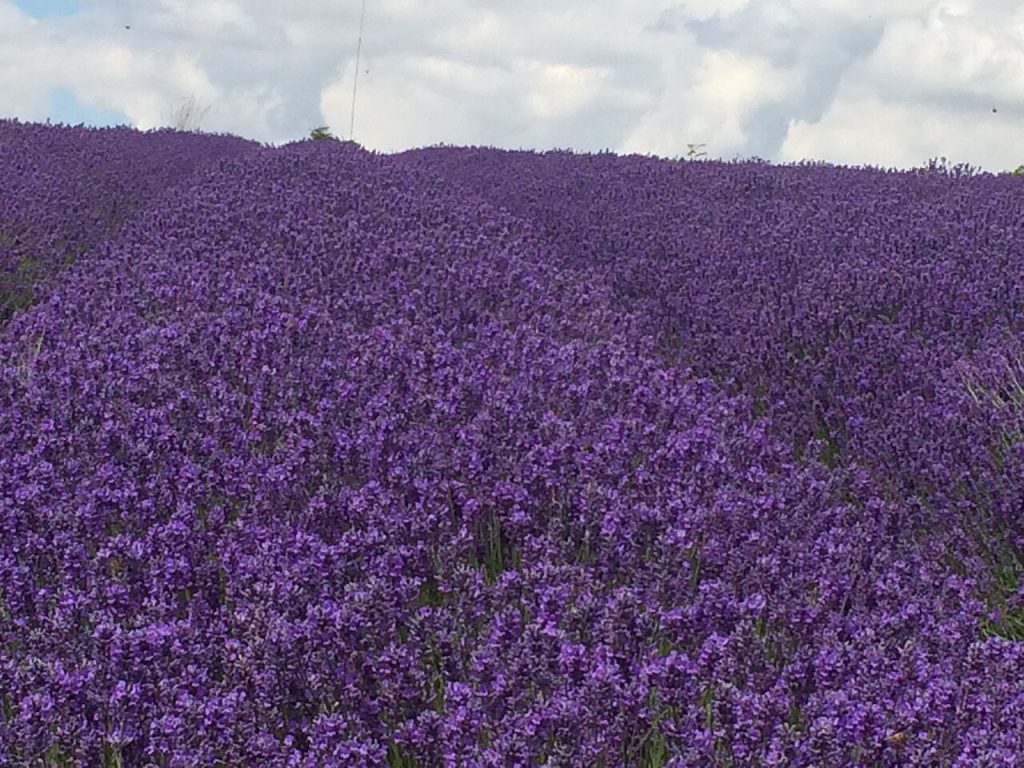
A perfume house that buys a flower field is buying more than land. It is buying a harvest window of three weeks, a group of pickers who know to start before the sun is high, and a supply of an ingredient that no synthetic has yet replaced, at least not in the way the marketing requires.
Three weeks in May
Rose de mai, the variety grown around Grasse for perfume, flowers once a year and must be picked in the cool hours of the morning, before the heat changes the aromatic profile of the petals. The harvest lasts three to four weeks. The flowers must reach the extraction vessel within hours, which means the distillery has to be near the field, which means the field cannot be moved to a cheaper country.
The yields are brutal. By the trade’s own figures, a kilogram of rose absolute takes several hundred kilograms of petals, and a kilogram of the distilled otto takes several thousand. A single hectare produces a quantity of oil that would fit in a small case. This is the arithmetic that makes natural materials expensive, and it is also the arithmetic that makes them impossible to fake convincingly.
Why land became strategic
Three pressures converged on the flower-growing regions in the last two decades. The first is climate: earlier springs, late frosts, heat spikes during the harvest, and a flowering window that has been shifting in ways that make planning difficult. The second is property: land near a desirable town is worth more as housing than as a field, and the children of growers have other options. The third is scale: the number of growers in the historic regions has fallen steadily, and each departure removes a set of skills as well as a supply.
The industry’s response has been vertical integration. Houses sign long-term contracts, fund growers, buy land, and in a few cases run the harvest themselves. It is insurance, and it is also a story, because a field is a very good thing to photograph.
The labour is the part that cannot be bought quickly. Picking jasmine requires hands that can take a flower without bruising the petal, and the work is seasonal, poorly paid and taught in the field rather than in a school. A region that loses its pickers for a decade does not get them back when a house arrives with a contract, because the knowledge lives in families and the families have moved to the coast. Land can be purchased in a season. A workforce takes a generation.
The synthetic question
Synthetics are not a fraud. They give consistency, safety, longevity and a supply that does not depend on the weather, and many of the great perfumes of the last century were built on them. A house that refuses them entirely is making a stylistic choice, not a moral one.
But a natural absolute is a vintage and a synthetic is a specification. The absolute carries the year, the field and the weather, and that variance is what gives a natural composition its depth. Replace it and the formula becomes reproducible, which is good for production and bad for the thing that makes a perfume worth returning to.
The cost of provenance
Provenance has become an asset class. A house that can say the rose came from its own field has something a competitor cannot buy, and it has paid for it in capital rather than in advertising. The claim also survives scrutiny, which is more than can be said for most claims in the category.
The risk is that the field becomes a set design. If a house owns four hectares and needs four hundred, the field is a photograph and the supply is elsewhere. The honest version of vertical integration is dull and expensive: long contracts, shared risk, guaranteed purchase volumes, and a willingness to pay above the market for years.
What the fields protect
There is a genuine conservation argument here, and it is not often made well. The flower fields around Grasse are a landscape produced by a specific agricultural economy, and they exist because perfume pays for them. When the perfume money goes, the fields become villas.
The knowledge is equally fragile: which field drains, when to pick, how long to leave the petals before extraction, how to read a season. None of it is written down in a form that survives a generation of disuse.
So the purchase of a field is a hedge against two things at once: a shortage of material and a shortage of story. The industry needs both, and only one of them can be manufactured.
A field is the last honest certificate in perfumery. Everything else on the box is a description of an intention, and intentions are cheap, which is why the industry has spent so much to own something that is not.