Why Concert Halls Are Built for Silence Before Sound
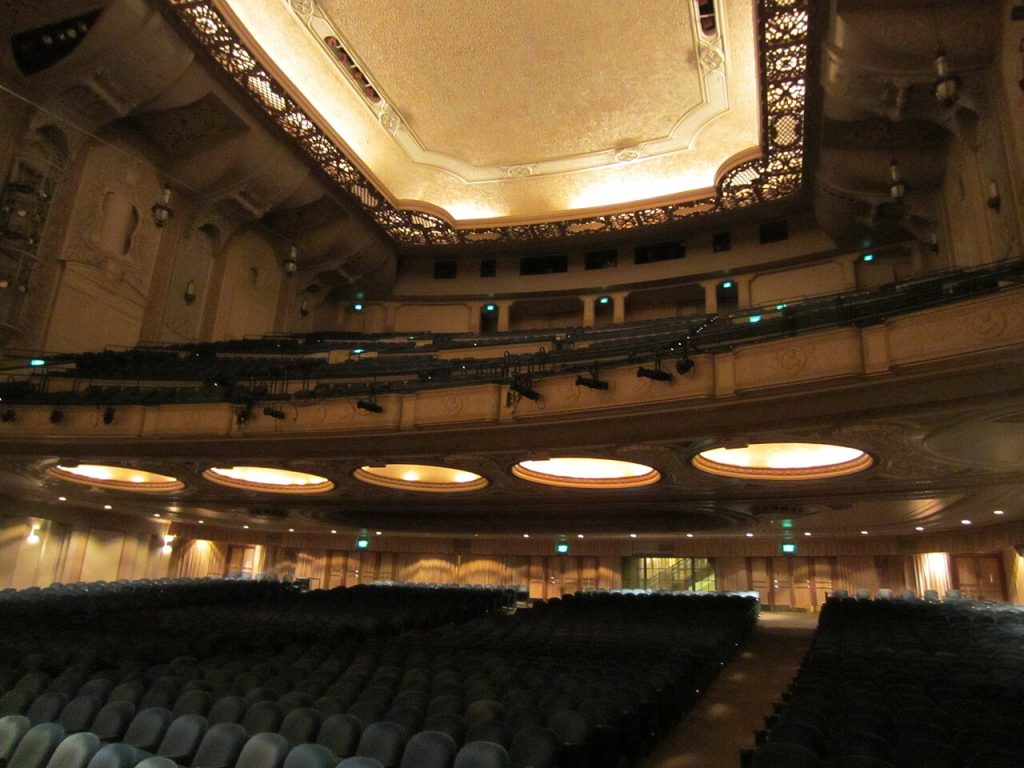
A concert hall is a machine for removing sound, and the removal is what an audience experiences as clarity. Most of the cost of building one goes into things nobody photographs: mass, isolation, and the slow arithmetic of how long a note is allowed to linger.
The number that decides everything
Reverberation time is the measure that governs the rest. It is the time a sound takes to decay by sixty decibels after it stops, and the target depends on the repertoire: roughly two seconds for a large romantic symphony, closer to one and a half for chamber music, and shorter still in an opera house, where the words have to arrive before the orchestra does. A hall tuned for Bruckner will smear a harpsichord, and a hall tuned for speech will make a string section sound like a recording.
The figure is not a single value. Low frequencies decay differently from high ones, and the ratio between them, the bass ratio, is what separates a hall that feels warm from one that feels thin. Early decay time matters as much as the total, because the first reflections tell the ear where it is, and a hall can have a generous reverberation and still feel dead if those early reflections are weak or late.
The shoebox and its imitators
The most admired halls are boxes. Vienna’s Musikverein opened in 1870, Amsterdam’s Concertgebouw in 1888, Boston’s Symphony Hall in 1900, and all three are narrow, tall, lined in plaster over brick, with a wooden floor and a coffered ceiling that breaks up the return of sound. None of them was designed with modern acoustics, because the discipline did not exist. They were designed by ear, by trial, and by a preference for a rectangular room.
The vineyard hall, with terraced seating around a central platform, was meant to solve the problem of intimacy in large rooms, and its record is mixed. Berlin’s Philharmonie, opened in 1963, works; many of its imitators do not, because the seating geometry that brings listeners close also removes the parallel walls that give a box its strength. Geometry does more than decoration, and the halls that fail usually fail at the section drawing rather than the finish schedule.
Seats are acoustic material
An audience is a absorber. Upholstered seats take high frequencies out of the room, which is why an empty hall sounds bright and dry and a full one sounds settled. Designers therefore measure a hall in both states and specify seats whose absorption, when empty, roughly matches that of a seated person, so that the acoustic does not swing wildly between rehearsal and performance.
There is a further complication near the front, where low frequencies cancel over the backs of the seats ahead. This seat dip is well documented and hard to design out, and it is one reason the most expensive seats are not always the best ones. Carpet, curtains and the choice of balustrade all take their cut, and every soft surface chosen for comfort has to be paid for somewhere in the reverberation budget.
The silence budget
Background noise is specified in noise criteria, and a good hall sits near the bottom of the scale, quieter than a recording studio’s control room. That means ventilation ducts sized generously and lined with silencers, equipment mounted on isolated pads, and the whole auditorium separated from the rest of the building so that a lift, a kitchen or a delivery does not arrive in the pause before a pianissimo.
In cities, the ground itself is a source. A subway line two streets away transmits through the soil and up through the structure, and the answer is a building on springs, or a double shell with the inner room floating free. It is enormously expensive, entirely invisible, and the first item to be value-engineered when a project runs over budget, which is why so many new halls are admired for their foyers and criticised for their quiet.
The invisible luxury
Acoustics cannot be rendered. A donor can be shown a marble stair and a glass wall, and both will photograph well in a brochure; nobody has ever raised money with a picture of a reverberation curve. This asymmetry shapes what gets built. Lobbies grow, seats shrink, and the consultant’s fee for the room’s acoustic is a rounding error against the cost of the stone in the entrance.
The paradox is that the sound is what the audience remembers and what the building is for. Every other luxury in the building is a prelude to a moment when twelve hundred people sit still and a single note travels to the back of the highest balcony and returns, changed, a second and a half later. That interval is the product, and it is manufactured out of mass, distance and patience.
Before the first downbeat there is a few seconds when the hall is doing its most difficult work, and nobody is listening to it. The players tune, the air moves, the room settles. Then the note, and the room answers.