What Bar Soap Does That a Body Wash Cannot
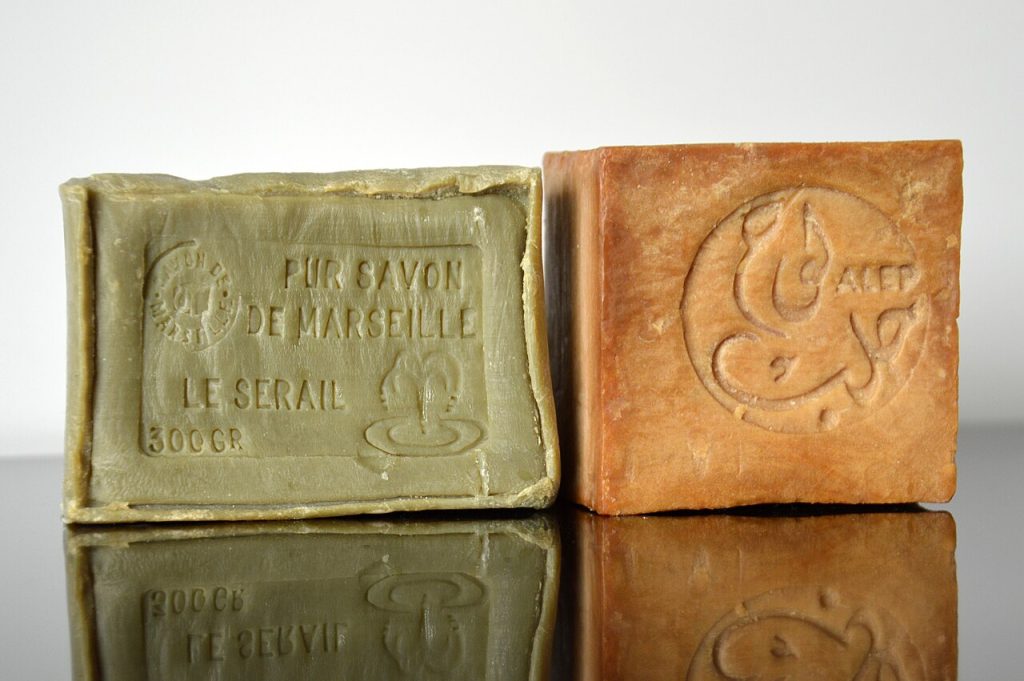
Bar soap spent two decades as a shorthand for thrift and has returned as an argument about concentration. The collapse of the bar was never really about performance. It was about water, plastic, and the way a bottle can carry a claim that a slab of tallow cannot.
The arithmetic of saponification
A soap is a salt. Fat or oil meets sodium hydroxide, the triglyceride splits, and what remains is soap and glycerol, with the glycerol staying in the mass if nobody takes it out. Industrial production takes it out. The boiling process is run, the neat soap is salted so that it separates and floats, and the glycerol is drawn off the bottom and sold into other trades, which is why the cheapest bars are also the driest.
Milling is a separate decision. Passing a soap through steel rollers three or four times forces water out and aligns the crystal structure, and a triple-milled bar leaves the press at perhaps ten per cent moisture instead of twenty-five. It is denser, it dissolves more slowly, it cracks less in the dish. Cold-process soap goes the other way: the batch is poured, left to saponify, then cured on a rack for four to six weeks while water leaves and the pH settles toward nine or ten.
What the bottle solved
Body wash is mostly water, sometimes as much as eighty-five per cent, which is why it needs a preservative, a thickener and a chelating agent before it needs a surfactant. It solved real problems. A bottle is easier to share, easier to leave in a hotel bathroom, easier to dose one-handed in a wet shower. It also permitted a category of claims a bar cannot physically hold, because a polymer or an occlusive can sit in a gel and rinse off leaving a film that a solid cannot deposit.
The economics moved with it. Water is cheap to buy and expensive to ship, and the bottle turned a commodity into a branded object with a pump, which is where the margin lives. The bar was left with the worst shelf position and the least glamorous story, and it lost a generation of buyers who had never used one that was any good.
The glycerin question
Glycerol is why the argument keeps returning to moisture. It is a humectant, it draws water, and in a cold-process bar it sits at six to nine per cent of the mass because nobody removed it. In a milled bar it is often added back afterwards, which is a different thing and usually advertised more loudly. What a bar cannot do is hold the light silicones and cationic conditioners that make a wash feel slippery and soft in the minute after rinsing.
The reputation for tightness came from cheap bars rather than from soap as such. A high-pH bar with no superfat, used in hard water, leaves calcium salts on the skin, and that squeak is what people remember and mistake for clean. Soft water and a bar with fat left in it behave nothing like that.
Superfatting and the compromise
Superfatting is a deliberate error: less lye than the recipe requires, so five to eight per cent of the oil survives as oil. The bar feels creamier, cures harder and disappears faster, which is the trade a soap maker makes and a buyer rarely sees. Too much and the bar goes rancid in its wrapper; too little and the whole point of the exercise is lost.
The synthetic detergent bar is the other compromise, and it is the one most large brands actually sell. It is a syndet, not a soap, built to sit near pH 5.5 and carry the same surfactants as a bottle in solid form. In some markets the word soap is a legal category defined by ingredients and claims, so these bars cannot be called soap at all. The vocabulary on the shelf is regulation rather than chemistry.
The shelf and the return
Retail arithmetic explains the shape of what is available. A bar is heavy, breakable, hard to sample, and occupies shelf space that could hold a bottle at four times the price per wash. It survived in the pharmacy, the health shop and the hotel, and it returned once brands worked out that a paper-wrapped solid could be sold as an object rather than a utility, with a scent, a stamp and a story attached.
The honest limit is worth stating. A bar is not better because it is solid. It is better when the fat is good, the cure is long and the formula is dense, and a poor bar in paper is exactly as poor as a thin gel in plastic. Solidity is a format, not a virtue.
The bathroom shelf is one of the few places where an ordinary person makes a decision about water, packaging and concentration without being asked to think of it in those terms. A bar makes that decision visible, because it sits there shrinking and gives an honest account of how long it lasts. That is a small thing to admire, and it is more than most packaging offers.