Cashmere: Why the Best Fleece Is Getting Scarcer
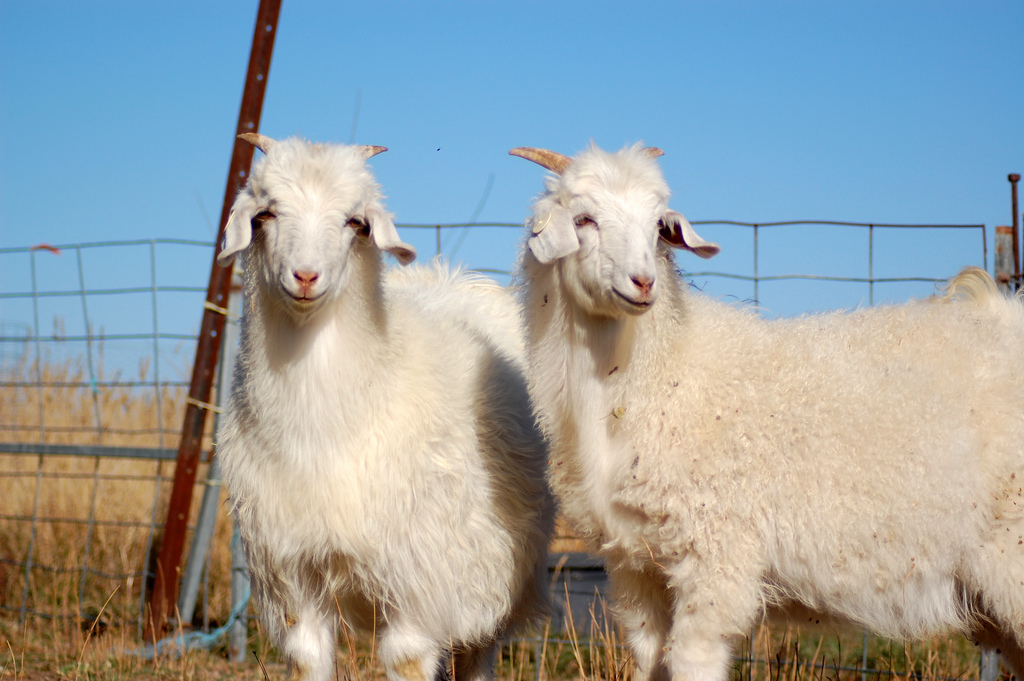
Cashmere is sold on touch and judged on time, and the two have almost nothing to do with each other. The softness that sells a sweater in a shop comes from the diameter of the fibre; the durability that keeps it wearable for a decade comes from its length, and the trade has spent thirty years quietly exchanging the second for the first.
The undercoat and its two numbers
Cashmere is the down that a goat grows beneath its coarse outer coat to survive a Central Asian winter. It is combed out in spring, when the animal sheds, and a good goat yields somewhere between 150 and 250 grams of raw down, which is why a large sweater consumes the annual production of three or four animals. Nothing about this is efficient, and nothing about it can be accelerated without changing what the fibre is.
Two measurements decide quality, and only one of them is ever mentioned. Fineness is expressed in microns, and the finest down runs between fourteen and nineteen; the lower the number, the softer the hand. Staple length is expressed in millimetres, and good fibre runs well past thirty-six. Fineness determines how the yarn feels on the first day. Length determines whether the yarn holds together on the thousandth.
How softness was separated from strength
Short fibres do not spin into a stable yarn. They migrate out of the twist under friction, tangle with their neighbours and form the small hard balls that ruin a knit. Long fibres wrap around each other and stay. A mill that wants a soft number and a low price can buy short, very fine down, spin it loosely, and produce a garment that feels extraordinary in the shop and is visibly tired by the second winter.
Dehairing is where the trade-off is made concrete. Raw cashmere arrives mixed with coarse guard hair, and machines separate the two. Set the machine aggressively and the yield rises, because more fibre is accepted, but the average staple shortens. Set it carefully and a third of the weight goes to waste. The difference does not appear anywhere on a label.
Where the fibre comes from
The best down comes from the coldest, highest, most marginal grassland: Inner Mongolia, the Alashan plateau, parts of Afghanistan and Iran, the high valleys of the Himalaya. The logic is brutal and elegant. An animal that must survive at minus thirty grows a finer, denser undercoat than one kept in a milder place, and no amount of breeding can fully imitate a hard winter.
Herd sizes have grown enormously since the 1990s, when herding was privatised across much of Mongolia and Inner Mongolia and cashmere became one of the few reliable sources of cash in places with few others. More goats on the same grassland means more grazing pressure, thinner animals, and a slow decline in the average quality of the clip. The trade has responded by buying more of it.
The two-year test
Pilling is not always a defect. Even good cashmere will pill a little in the first weeks, because a few short fibres always escape the yarn. What matters is whether the pilling stops. A well-made knit settles after two or three careful combings and then holds its surface for years. A poorly made one keeps generating pills, because the yarn is still shedding the fibres it was never able to hold.
The other tell is the hand. Good cashmere feels slightly cool and dry at first, then warms against the skin and stays warm; it has a faint animal smell and a little weight. A yarn that has been softened with resin feels almost wet-slick and slightly synthetic, and it will feel thinner each time it is washed.
What grade A actually costs
Raw cashmere is traded by grade, and the spread between the top and the middle is wide enough that a mill can halve its material cost by moving one grade down. That spread is the entire economics of the category. It is also why a house that wants a ten-year sweater must buy fibre years in advance, on contract, from the same herders, at prices that look irrational in a soft market.
A few houses do exactly this, and speak about it in the language of stewardship, which is partly true and partly a marketing position. The honest version is simpler: they pay more for length, because length is the only thing that keeps a customer for a decade.
The difficulty is that the customer cannot see any of it. A label states a fibre and a country, both of which can be true of a garment that will be shapeless in two years. Softness is available to the hand in ten seconds; length is available only after the fact, which is a poor basis for a purchase and an excellent basis for a reputation.
So the useful question in a knitwear shop is not whether the sweater is soft. It is whether it is heavy enough to be worth repairing, and whether anyone can say how long the fibre is. Most cannot. The ones who can are usually the ones who have been buying from the same valley for twenty years.