How to Read a Garment’s Seams Before Its Label
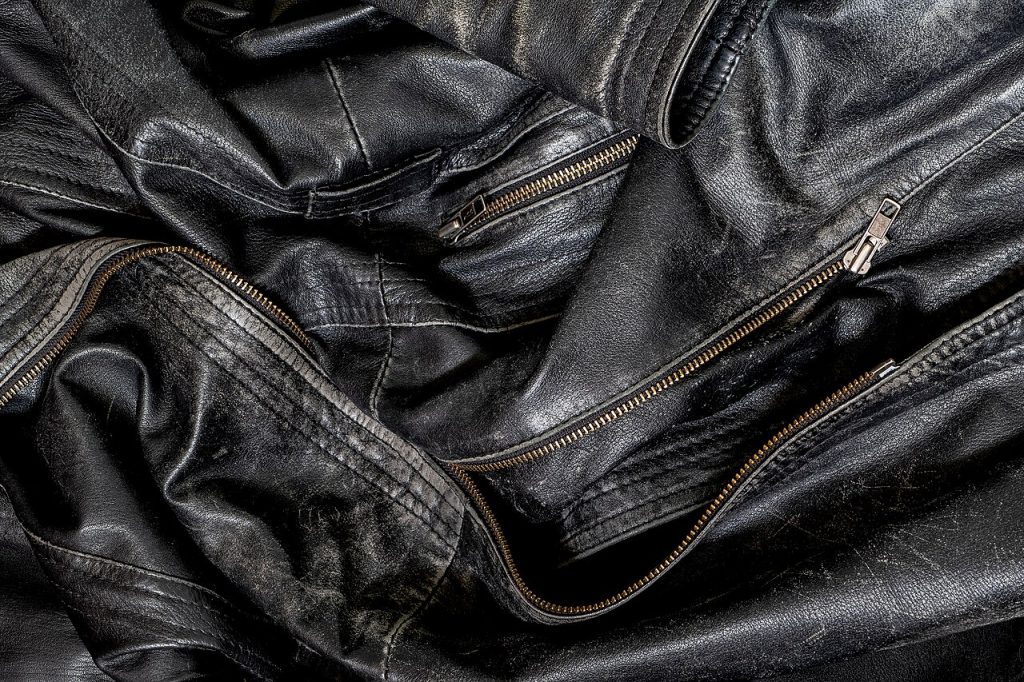
A garment’s label is a claim; its seams are a record. Nothing in a shop makes this clearer than turning a jacket inside out, where the truth of the thing is available to anyone who knows what a clean seam allowance looks like and how much cloth has been left for the future.
The allowance as a promise
Seam allowance is the fabric left beyond the stitch line. A tailored jacket built to be altered carries roughly a centimetre at the centre back and rather more in the side seams; a jacket built to be sold carries six millimetres, because cloth costs money and nobody is expected to return. The difference is invisible when worn and decisive when the body changes, which it does.
The finish of the raw edge matters as much as its width. A French seam encloses the raw edge inside a second seam and is slow, neat, and reserved for fine cloth. An overlocked edge is fast and adds bulk, and on a lightweight jacket it produces a faint ridge that can be felt through the lining. Neither is dishonest. One is simply more expensive to make.
Canvas, glue and the roll of a lapel
The chest of a good jacket contains a floating layer of horsehair and wool canvas, attached to the cloth with thousands of small stitches. The canvas gives the chest its shape and, crucially, its memory: it moves with the wearer and recovers. A fused jacket replaces the canvas with a glued interlining, which is flat, quick and cheap, and which after a few dry cleanings begins to separate from the cloth in small bubbles that cannot be repaired.
The test requires no expertise. Pinch the cloth between the button and the lapel and feel for a third layer that slides slightly. Then look at the lapel from the side: a canvassed lapel rolls in a curve from the collar down to the button, while a fused one tends to sit flat and crease along a line. A tailor will call this the difference between a lapel that has a belly and one that has an edge.
Stitches that mean something
Pick stitching along the edge of a lapel is now largely decorative, applied by machine to suggest hand work. It is a pleasant detail and no evidence of anything. The stitches that do indicate hand work are the ones nobody photographs: the pad stitch that shapes the lapel from the inside, the backstitch at the shoulder, the small irregular tension of a hand-sewn sleevehead.
Buttonholes are the most legible of all. A machine buttonhole is perfectly uniform. A hand-worked one has a slight variation in the density of the gimp and a small knot at the end, and it takes a skilled person several minutes per hole on a jacket that may carry eight of them. The labour is real, the result is beautiful, and neither fact tells you whether the jacket fits.
There is one more seam worth finding, and it is at the shoulder. A sleeve set by hand into an armhole is eased in with tiny stitches that distribute fullness across the crown; a sleeve set by machine is sewn flat and then closed, which is faster and produces a slightly hollow crown that shows as a dent when the arm lifts. On a jacket that costs as much as a used car, that dent is the difference.
The interior as document
The lining is where cost engineering becomes visible. Bemberg, a cupro lining, breathes and drapes and is expensive; polyester is cheap, hot and durable. Inside pockets should be reinforced at the mouth, because that is where they tear. The spare buttons sewn into the hem are a small courtesy that has largely disappeared, along with the tailor who would have used them.
The most informative line inside a garment is rarely the one printed on the label. It is the seam that runs down the side, where the allowance, the thread and the density of the stitching describe a workshop’s habits better than any country of origin.
Why the label still wins
None of this suggests that buyers are foolish. Reading construction takes time, and time is what a shop is designed to remove. The label compresses an enormous amount of information into a word, and most of the time that compression is accurate enough. The problem is the cases where it is not, and those cases are exactly the ones where the price is highest.
There is also the matter of resale. A market that prices labels rather than seams will keep rewarding labels, and a house that has spent forty years building a name has no incentive to explain that the name is doing the work. This is not a conspiracy; it is a market being efficient about the wrong signal.
The skill, such as it is, costs one afternoon to acquire and cannot be unacquired. Turn the garment inside out, look at the allowance, feel the chest, find the buttonhole, and then decide whether the label is describing the object or replacing it.
Construction is the only document a garment signs in its own hand. Everything else is a statement made on its behalf.