The Watch Collector Guide to Independent Horology
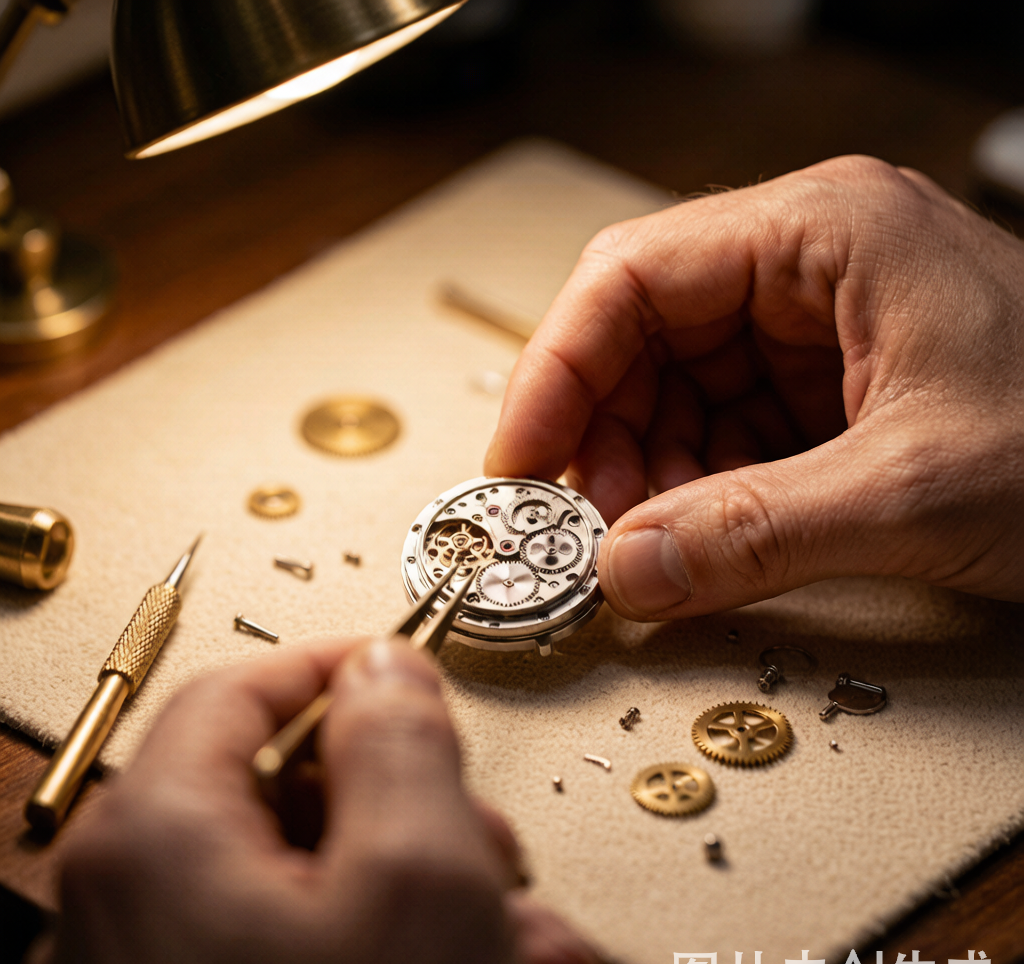
Forget Rolex. The most interesting watches in the world are being made by companies with fewer than thirty employees.
Independent horology is having a moment it never asked for. For decades, the watch world operated on a simple hierarchy: Swiss conglomerates at the top, Japanese giants in the middle, and everyone else in the bargain bin. That hierarchy is collapsing. The watches that collectors actually want are increasingly made by artisans whose names you cannot pronounce and whose annual production would fit in a shoebox.
What Is Independent Horology
In practical terms, an independent watchmaker is one whose company is not owned by a luxury group. But that definition misses the point. The independents that matter are the ones who make their own movements, from the base plate up, in workshops that employ twenty people, not two thousand. They are not independent because they chose to be. They are independent because what they make cannot be mass-produced.
The archetype is Philippe Dufour, a watchmaker in the Vallee de Joux who produces roughly twelve watches per year and whose waiting list is so long it has become a joke among collectors: you do not order a Dufour. Your grandchildren order a Dufour. His Simplicity model, introduced in 2000 as a deliberate rejection of the complication-obsessed industry, now trades on the secondary market for roughly ten times its original price. Dufour did not create scarcity. He created quality so extreme that scarcity was inevitable.
The New Independents
The generation that followed Dufour is more restless. Rexhep Rexhepi, a Kosovar watchmaker who apprenticed at Patek Philippe before founding Akrivia at twenty-five, makes watches with hand-engraved movements and dials finished to a level that rivals, and occasionally surpasses, the best work from Geneva. His Chronometre Contemporain won the top prize at the Grand Prix d Horlogerie de Geneve in 2018. He was thirty-one. His production: roughly thirty watches per year.
Then there is Kari Voutilainen in Motiers, whose guilloche dials are cut on century-old rose engines by artisans who spent years learning to operate machines that have not been manufactured since the 1920s. Voutilainen makes every component in-house, including the balance springs, a feat that fewer than five watch companies in the world can claim. His annual output is under fifty pieces. He is not trying to change the watch industry. He is trying to preserve it.
Why Collectors Are Fleeing the Conglomerates
The appeal of independent horology is partly aesthetic, partly philosophical. A watch from a major brand is a product of committee decisions, marketing budgets, and margin targets. A watch from an independent is a product of obsession. The distinction is visible. The hand-finishing on an Akrivia dial, the anglage on the edges of the bridges, the black polish on the steel components, cannot be achieved by machine. It requires a human being, a loupe, and patience that borders on pathology.
There is also the question of value. A steel Rolex Daytona trades at a premium because Rolex restricts supply. This is artificial scarcity. An Akrivia trades at a premium because Akrivia literally cannot make more watches. This is organic scarcity. The difference matters to collectors who have grown tired of playing the authorised dealer game, building relationships with salespeople they do not like to buy products they do not want, just to earn the right to buy the product they actually wanted two years ago.
How to Start Collecting Independents
Begin with the entry-level independents. Nomos from Glashutte makes in-house movements at prices that start under 2,000. Grand Seiko, while not strictly independent under the traditional definition, operates with such autonomy from Seiko that its watches feel like the product of a boutique manufacture. The finishing on a Grand Seiko dial, particularly the Snowflake, rivals watches at three times the price.
From there, explore brands like Ming, a Malaysian independent whose minimalist aesthetic and innovative case design have earned a cult following, or H. Moser and Cie, a Swiss independent that combines traditional finishing with a rebellious design sensibility that has made it the most interesting watch brand most people have never heard of. At the top of the pyramid, the Dufours, the Rexhepis, and the Voutilainens await. But by the time you are ready for them, you will not need a guide. You will already know.
The Bottom Line
Independent horology is not for everyone. It requires patience, research, and a willingness to wait years for a watch that may arrive with imperfections a machine would never allow. But those imperfections are the point. They are evidence that a human being made something that a machine could not. In an era of algorithmic everything, that evidence is worth more than gold.